The GERATOL Net

75 Meter Extra Class WAS Net

Archive for the 'From the webmaster' Category

Featured GERATOL Member

As part of the GERATOL Website revitalization efforts, we are going to be featuring GERATOL Net members, and especially our Elected and/or appointed Net Officials.

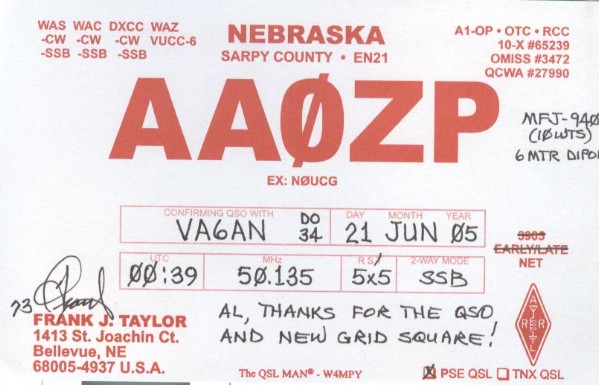
This month, we start off profiling one of the GERATOL Net’s greatest supporters, and overall experienced operators:  Frank – AA0ZP, who is of course the newly re-elected Secretary of the GERATOL Net.

Frank was first licensed in 1960 while a senior in High School in Louisiana as KN5BCC. We all wonder where Frank’s southern accent went !!

While a young Ham, exploring the bands, Frank operated using a Heathkit DX-40 and a Hallicrafters Sx-99. For you younger folks on the net, check out those pieces of equipment. They were quite popular back in the 60’s. His antenna farm consisted of a dipole and a Demi-Quad.

As is the case with many young Hams, life got in the way, and Frank’s license expired when he went off to college, but his interest in Ham Radio never waned and after 21 plus years of service to his country in the US Air Force (in communications, what else?) He retired from the U.S. Air Force in 1986 as a Major and flew on the SAC Airborne Command Post (Looking Glass) as Comm Officer for 5 1/2 Years.

Following his military career, he was once again bitten by the Ham-bug, and was back on the air in September of 1992 as a General (N0UCG) using the old novice rig, updated with a Heathkit VF-1 VFO instead of crystals. Technology had changed over his thirty year hiatus from the hobby, and Frank was going to start taking advantage of it.

He achieved Worked All States on 40Meter CW before Christmas of that year. He then added a new Kenwood TS-450S and started in on SSB in late 1992. He achieved DXCC and a bunch of other awards in 1993.

Today, his primary rig is a Kenwood TS-950SD, which he obtained in 1995. His antennas are a 3-element tri-band Yagi at 40 feet, a G5RV flat-topped at 40 feet (for 80 Meters through 10M) and an inverted-L for 160 Meters. He also added an MFJ 9406 6 Meter rig in 2003 and also has a Kenwood TM721A dual bander with J-pole antenna for 144 and 440Mhz plus an Icom 24AT hand held.

Frank upgraded to EXTRA (20wpm code) in 1995 and he remains active still having a blast on the bands. He was introduced to 6 Meters in 2003 when he bought an MFJ 9406 10 Watt transceiver at the Dayton Hamfest.

He was able to get VUCC and after 10 and 1/2 years, finally worked the one state needed to complete WAS on 6Mtrs, which as we all know, is no easy task. Perhaps even more challenging than our Unbelievable Operating Achievement Award on the GERATOL Net. Speaking of which, Frank completed his requirements for and obtained his GERATOL Number (#1932) in December of 1995. In addition, Frank has achieved 8 band SSB WAS, 5 band CW WAS, a Mixed band RTTY WAS, and 331 countries for DXCC credit and added 5-Band DXCC in 2012. All very impressive achievements.

Finally, he got his DXCC total to 338 countries and got the last two QSLs for the ARRL’s Honor Roll on 20 November 2014. He also has WAZ and the new WUST award.  WUST of course, is the very challenging award where you need to work US Territories.

Frank remains active on the GERATOL Net, 3905 Century Club, and OMISS Nets as well as the HF bands.

Some of his other, non-HAM related interests include: collecting military insignia, restoring his old Lionel train set and collecting NASCAR 1/64 die cast cars.

Frank is a Life Member of ARRL, an ARRL-VE, the trustee of the SAC Memorial Amateur Radio Club call sign K0AIR and of GERATOL Net Amateur Radio Club call sign W0NL. He is past Vice-President of OMISS, past-President of the 3905 Century Club, and last but not least, is our newly re-elected Secretary of GERATOL Net.

Feel free to congratulate Frank on his re-election, and of course, give him a warm welcome when he checks into the net.

Thanks for your service to our Country, Ham Radio and the GERATOL Group Frank !!!

73, Kevin N1KL


posted by Kevin in From the Administrator,From the webmaster,GERATOL NET NEWS and have Comments Off on Featured GERATOL Member

My deepest appreciation and thanks…

Today I received a box in the mail that I was not expecting. After I soaked it in water in case it was a bomb, I opened it and found a pleasant surprise from the net: The Phoenix Award.

Al Gritzmacher AE2T #1800 with Phoenix AwardThank you all that had a hand in this. It means a lot to me. I have worked towards many of the net awards and endorsements, but never seemed to get around to ever applying for them. I always enjoyed the actual on-air part more and I kept procrastinating. This one was a complete surprise.

I don’t remember when it was I started the web page for the net, but it began very simply as a project while I was learning HTML. I hoped my tinkering with it could turn into something useful to the net. Several hosts later and a couple of domain name changes (Remember www.freeport.net/~geratol?) it’s become a central point of communication for the net.

Since handing the reins over to Kevin N1KL, we’ve got the site running smoothly and added some features to make it even better. I know it will continue to serve the net well under his guidance, and I will assist when needed.

Thank you again. I will place this in a prominent place in my shack!

73, Al AE2T #1800

(Just kidding about soaking it in water!)

posted by Al Gritzmacher in From the Membership,From the webmaster and have Comment (1)

Strong Ties Bind Amateurs and Broadcasters

By James Careless

Many people who work in broadcast radio got their start as amateur radio operators — hams — and remain active in the hobby.
At iHeartMedia alone, “we have 157 people on our ham radio list,” said Charles Wooten, director of engineering and IT at iHeartMedia Panama City, Fla. An amateur radio operator himself since the age of 12 (call sign NF4A), Wooten maintains that list. “Ninety percent of them are engineers, but we also have DJs, program directors and operations directors.” At least four of the company’s regional engineering VPs are hams.

The fact that so many of iHeart’s hams are engineers makes sense. Many of the skills that a ham learns to get on air are the same needed by a technical broadcast professional.  “Ohm’s Law is Ohm’s Law, whether you are using it to work on a home-built amateur radio transmitter or to keep a major-market radio station on air,” said Walter Palmer, W4ALT and director of broadcast operations, engineering and programming at Newsradio WGMD 92.7 FM in Rehoboth Beach, Del.  “So it makes sense that someone who loved ham as a teenager would be drawn to radio engineering as a career. It was certainly true for me.”

ONE LOVE DROVE ANOTHER

There’s a good reason so many professional radio engineers started as ham radio operators: They were exposed to the hobby long before needing to find a job. This was the case for Wooten.
“When I was 11, I was curious as to what was causing the TV interference to my Saturday morning cartoons,” he recalled. “Once I figured out that it was a neighbor’s ham radio rig and got to see his shack for myself, I caught the bug right there and studied to get my ham license.”
In turn, the RF propagation and electrical knowledge Wooten gained as a teenaged ham — often building his own equipment for very little money — gave him the insight and interest to seek out radio engineering as a career.

The same is true for Brad Humphries, AE4VJ and market director of engineering for the Beasley Media Group in Charlotte, N.C.
“I’ve been an electronic nerd most of my life, and a ham since I was 14,” said Humphries. “A summer job at a local amusement park led me into fixing up their handheld radio system using my ham knowledge, which eventually led me into broadcasting.”

Steve Dove, W3EEE and minister of algorithms for Wheatstone, said via email, “I got my license, G3YDV, as soon as it was legally possible at 14; for a brief while, I think I was the youngest ham in the [UK].” His entry into broadcasting? “I was a young, restless and somewhat rebellious anti-establishment teenager. The ’60s ship-borne pirate radio station era (Radio London, Radio Caroline) was drawing to a close, and hordes of little land-based pirates filled the gap; including me.”

As part of that merry band, Dove and his fellow pirates built home-brew tube transmitters up to 100 watts, and then the consoles to produce programming.

“In order to pay the subsequent fine when we were caught, we started a mobile disco using the studio gear and an equally home-brew PA, and the console drew the attention of a ‘proper’ console manufacturer, Alice,” Dove said. “Commercial broadcasting started late in the UK [early ’70s] and the timing was perfect; of the first 40 stations, we had consoles in 19 of them.” He subsequently did console work while touring with AC/DC, Jethro Tull and Yes in his pre-Wheatstone days.

On the flip side, Nautel Regional Sales Manager Asia/Pacific Chuck Kelly, VE1MDO, got into amateur radio while working as a radio engineer.

“My father and grandfather were hams, so you could say that I grew up with the hobby,” Kelly said. “But it wasn’t until I was working in radio that I saw how having an amateur radio license and equipment could help my job; especially during emergencies where regular communications were down.”

In the 1970s, Scott Westerman, W9WSW, was working in broadcast radio at Michigan State University, where he is now associate vice president for alumni relations. That was when he learned how useful ham radio operators could be during emergencies, providing lifeline communications for first responders and the public alike.

“Today, I am a licensed ham who belongs to the SKYWARN tornado spotter’s network,” Westerman said. “We keep an eye out for signs of pre-tornado swirling clouds from various locations, and radio that information into the National Weather Service during severe weather.”

MACGYVERISH GIFT TO RADIO ENGINEERS

There is no doubt that ham radio has inspired many of its youngest practitioners with a love of radio transmission and technology, a love that guided them to professional careers in radio broadcasting. The industry is better off for it.
But amateur radio has done more for radio than provide it with a pool of talented, motivated employees. It has also given these people an intellectual grounding in the basics of radio engineering, combined with a MacGyverish ability to make things work; no matter what.

Wooten’s engineering vehicle in Biloxi, Miss., the day after Hurricane Katrina hit the Gulf 
Photo courtesy Charles Wooten

“I don’t think that there is anyone who understands radio science and technology at such as profound a level as hams,” said Chuck Kelly. “They’ve got such a deep grasp of radio that they can dive into and fix equipment problems at the most basic level; down to individual resistors, capacitors and diodes.”

This profound knowledge and know-how is a function of equipment-buying poverty; particularly among older hams when they were teenagers.
“When I was starting out as a kid in amateur radio, I didn’t have a lot of money, so I learned to make do with what I had at hand,” said Wooten. “This teaches you creative engineering and trouble-shooting skills that really pay off at a radio station when things go wrong; especially during an emergency when spare parts aren’t readily available.”
A case in point: During Hurricane Katrina in 2005, Wooten used his ham radio skills to keep the Clear Channel cluster of five radio stations in Biloxi, Miss., on the air.

“Without the ability to improvise and work with what we had, we would have gone dark when people most needed us,” he said. Using his ham skills, Wooten and his team nursed a generator with a water leak along for a few days, keeping the five stations on air until a new one could be brought it. They also used a portable satellite dish to create a two-way satellite link.

“We were the only stations in the Biloxi area with telephone service,” Wooten recalled. “The satellite channel provided T-1 [1.544 Mpbs] bandwidth, part of which was used for a couple of Cisco IP phones connected back to the corporate offices in Texas. The staff could call anywhere on these phones.”
All told, it was a fix MacGyver would have been proud of.

“Ham radio is all about using what you’ve got laying around, when you have to do something,” said Brad Humphries. “That is a good skill to have, because in the middle of the night when you have a problem at the radio station, you’re just going to have what you’ve got at hand to do something with.”

A SOURCE OF NEW BLOOD FOR RADIO?
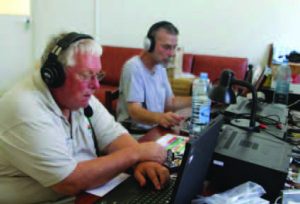
iHeartMedia’s Charles Wooten, NF4A, left, and Tad Williamson Jr., WF4W, are shown at C82DX, a 2013 amateur radio event in Xai Xai, Mozambique.
Photo courtesy Charles Wooten

It is widely held in the radio industry that engineering talent is scarce and becoming scarcer as engineers retire. At the same time, the upcoming generation of technically-minded youth is attracted to information technology rather than RF transmission and radio broadcasting. This begs a question: Could young people who are signing up as hams serve as an engineering talent pool for the radio broadcasting industry?

After all, “A repeater used for AM broadcasting is identical to one used by amateur radio operators,” said Dana Puopolo, a licensed ham (K1PUW) for 43 years and chief engineer of WGLS(FM)/Rowan University Radio in Glassboro, N.J.
“My ham walkie-talkie was type-accepted to work both for amateur and commercial radio usage, while the antennas used by AM radio and the 160 meter ham band are basically identical, except for their configurations. So yes, there is enough crossover between ham radio and commercial radio to justify training hams as professional engineers.”

This said, attracting young hams to radio broadcasting would require some changes in the radio industry.
“iHeartMedia pays our engineers well and treats them fairly, but there are many stations that don’t,” said Wooten. “Without better working conditions, talented young hams are likely to go into other fields of engineering; even though they love radio and we could use them here.”
Whatever happens, one thing is clear: The strong bonds between amateur radio and commercial radio continue to benefit the broadcasting industry, and inspire a love of the medium not found in many technical industries.

Source: Radio World News
posted by Kevin in From the Administrator,General Ham Radio News and have Comments (2)

Winter Field Day

01/12/2018
Maxim Memorial Station W1AW will host a group that will take part in Winter Field Day later this month. Sponsored by the Winter Field Day Association (WFDA), Winter Field Day will take place over the January 27-28 weekend, and it can be an opportune time to prep for ARRL Field Day in June.

“Assuming the weather holds out, a group of hams will be here the last weekend of January to operate W1AW in the Winter Field Day,” W1AW Station Manager Joe Carcia, NJ1Q, said this week. Headed by Frank Gitto, KA5VVI, the group will consist of members of the Warren County Amateur Radio Club (W2WCR) in New York. Gitto said the club is hoping to have an even dozen members at W1AW, operating in shifts of six. Carcia said the Warren County ARC operators will avoid the harsh elements and operate from indoors at W1AW, in the “home” station category.

According to the WFDA website, the Winter Field Day Association “is a dedicated group of Amateur Radio operators who believe that emergency communication in a winter environment is just as important as the preparations and practice that is done each summer, but with some additional unique operational concerns.” The WFDA said it believes that maintaining operational skills “should not be limited to fair-weather scenarios.”

For the hardier within the Amateur Radio ranks, Winter Field Day is an excuse to get out of the house and enjoy the great outdoors, and — let’s face it — it’s not cold and snowy everywhere during the winter. Gitto said that some Warren County ARC members will be operating WFD from Indian Lake, New York, using special event call sign W2C.

The event, which got its start in 2007, is not restricted to North America. All Amateur Radio operators around the world are invited to participate, and there are three entry categories — indoor, outdoor, and home. The rules are similar to those for ARRL Field Day. Operation will take place on all HF bands except 12, 17, 30, and 60 meters, as well as on VHF, UHF, and satellite. The event runs 24 hours. US and Canadian stations exchange call sign, operating category, and ARRL or RAC section.

Source: ARRL Website and WFD Website

posted by Kevin in From the Administrator,General Ham Radio News and have Comments Off on Winter Field Day

Dayton Hamvention Fair Grounds Expanding

News Release December 20, 2017

We are pleased to announce The Greene County Commissioners and the Greene County Fair Board have approved the construction of a new building at the Fairground/Expo Center.Greene County officials have decided to move forward with construction of a new building as it will continue to expand their presence in the region as a world class Exposition Center!


Hamvention certainly benefits from the decision to expand the Expo Center footprint. Construction is planned to be complete ahead of Hamvention 2018 and will be used for the event.
Additionally, another building on the property previously known as Fairgrounds Furniture, is being vacated and will be available for use by Hamvention 2018.

More details regarding the building sizes will be forthcoming but Hamvention is told the floor space added will cover an area larger than the tents Hamvention used in 2017.
Although this decision was made to expand opportunities at the Expo Center, Hamvention is grateful for the support Greene County, Xenia Township, and the city of Xenia.

Ron Cramer, General Chair, Hamvention
Jack Gerbs, Asst. Gen. Chair, Hamvention

From the Administrator: For those who attended the first year at Xenia in 2017, I am sure you will all agree the added building space will be much better than the overflow of tents with vendors.    Let’s see if we can get a group of GERATOLers to convene at Xenia (Dayton HamVention) in 2018 !!!  See you all there !!

Source:  QRZNOW.COM

posted by Kevin in From the Administrator,General Ham Radio News and have Comments Off on Dayton Hamvention Fair Grounds Expanding

Amateur Radio Volunteers Active in Latest Round of California Wildfires

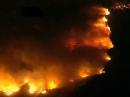
The massive and barely contained Thomas Fire in Southern California has consumed more than 230,500 acres, and the emergency has caused residents in fire-threatened areas to evacuate. Amateur Radio volunteers remain active supporting communication for American Red Cross shelters in Ventura County. More evacuations are likely, although the need for Amateur Radio assistance remains dynamic. Cal Fire said today (December 11) that evacuation operations will occur ahead of westward fire growth, speeded by low humidity and gusty Santa Ana winds, which will push the fire further into Santa Barbara, County. One of several fires that have broken out across Southern California, the Thomas Fire is far and away the largest.

Ventura County Auxiliary Communication Service (ACS)/ARES activated a week ago to support Red Cross shelters there, providing communications between shelters. Radio amateurs also have deployed to the Ventura County Emergency Operations Center (EOC). ACS/ARES expects to be deployed while shelters are open. According to ARRL Ventura County District Emergency Coordinator Rob Hanson, W6RH, the ACS/ARES volunteers are staffing four evacuation centers, in addition to the EOC.

Santa Barbara Section Manager Jim Fortney, K6IYK, told ARRL, an Amateur Radio digital network (ARDN) MESH video network has been live streaming images from several sites, as long as the network remains up.

“Loss of primary power has required using the solar power backup capabilities, but, unfortunately, the heavy smoke has made that backup less than fully reliable,” he said. In addition some sites are down because of power outages, and at least one hilltop site was overrun by fire.

“The Santa Barbara District ARES organization works closely with Santa Barbara County OEM [and] is prepared to support any requests as the Thomas Fire continues to burn into Santa Barbara County,” Fortney said.

Rich Beisigl, N6NKJ, reported that the Fallbrook Amateur Radio Group and other groups in the North County (San Diego) are providing communication at some evacuation centers, and the Red Cross has activated its Amateur Radio group. He said a group in Carlsbad also was providing shelter communication support.

In addition to power loss to repeater sites, solar panels charging off-grid batteries have been affected by the huge plumes of smoke blocking the sun.

ARRL Los Angeles Section Manager Diana Feinberg, AI6DF, said little official use of Amateur Radio was made during the fires in her Section. “All city and county governmental radio systems, commercial cellphone networks, and landline phone systems operated normally throughout the three fires in Los Angeles County, with just a few minor power outages of short duration.” At one point, the ARES-LAX Northwest District was very briefly in standby mode when it was thought that power might become intermittent at a hospital in the Santa Clarita area.

Feinberg said the City of Los Angeles Fire Department ACS opened a net for any traffic resulting from the small Skirball Fire, which claimed a half-dozen expensive homes and shut down a major freeway during the morning commute.

Source:   ARRL NEWS

posted by Kevin in From the Administrator,General Ham Radio News and have Comments Off on Amateur Radio Volunteers Active in Latest Round of California Wildfires

Year Long NASA On The Air Event Kicks off December 11

The Amateur Radio clubs at National Aeronautics and Space Administration (NASA) centers around the US have invited the Amateur Radio community to join the NASA On The Air (NOTA) special event. NOTA gets under way in December 2017 and continues through December 2018. In addition to being the agency’s 60th anniversary, 2018 will mark 50 years since NASA orbited the first human around the moon, and 20 years since the first elements of the International Space Station (ISS) were launched into low-Earth orbit.

Starting on Monday, December 11, 2017 (UTC), Amateur Radio club stations at various NASA centers and facilities will be on the air with special event operations to celebrate these monumental achievements, as well as current milestones. Some clubs will offer commemorative QSL cards, and a special certificate will be available indicating the number of NASA club stations worked on various bands and modes.

Launch of Atlas V Juno from Cape   Canaveral AFS

“We plan to have a web-based system for you to check your points total and download a printable certificate at the end of the event in December 2018,” the NASA announcement said. “Points will be awarded for each center worked on each band and mode (phone, CW, digital, and ‘space’ modes — satellites, meteor scatter, EME, ISS APRS).” That would, of course, include contacts with any of the Amateur Radio stations on the ISS.
Key anniversaries during NOTA include the 45th anniversary of Apollo 17 on December 11, 2017, which kicks off the event; NASA’s founding on July 29, 1958; the 20th anniversary of the ISS first element launch on November 20, 1998; the 20th anniversary of the ISS Node 1 Launch on December 4, 1998, and the 50th anniversary of Apollo 8 — launched on December 21, 1968, and returned on December 27 — marking the end of the event.
Ham radio clubs at various NASA facilities will sponsor their own special events to commemorate and celebrate specific events.

“We hope to be on the air for casual contacts and contests as well. All contacts with NASA club stations will count toward your total,” the announcement said. “QSL cards can be requested from each club you work and details will be on the individual QRZ.com profile page for each club call sign.”

More information is on the NASA On The Air website. Participating Amateur Radio clubs, and the NASA On The Air (NOTA) event are independent of — and not officially sponsored by — NASA. — Thanks to Rob Suggs, KB5EZ, NASA Marshall Space Flight Center Amateur Radio Club (NN4SA), and Kevin Zari, KK4YEL, NASA Kennedy Space Center Amateur Radio Club (N1KSC).
Source:ARRL

posted by Kevin in From the Administrator,General Ham Radio News,Uncategorized and have Comments Off on Year Long NASA On The Air Event Kicks off December 11

The ARRL International Grid Chase!

A new and exciting operating event will kick off on January 1, 2018, at 0000 UTC (New Year’s Eve in US time zones), when the ARRL International Grid Chase gets under way. The year-long event hopes to build on the success of the highly successful 2016 National Parks on the Air (NPOTA). The objective is to work stations on any band (except 60 meters) in as many different Maidenhead grid squares as possible, and then upload your log data to ARRL’s Logbook of The World (LoTW). Registration is free, and it costs nothing to use LoTW. Many hams are familiar with grid squares from the VHF/UHF and satellite realms, and everyone lives in one. ARRL’s VUCC is based on grid squares, and some contests on HF, as well as on VHF and UHF, also use them as a scoring factor.

John Morris, G4ANB, came up with the locator system, which the VHF Working Group adopted in 1980 at a meeting in Maidenhead, England — thus the term “Maidenhead grid square.” The system divvies up the entire globe into 324 fields, each containing 100 grid squares 1° latitude by 2° longitude in size. With 32,400 potential grid squares, it’s not likely that anyone will run out of challenges, even though some grid squares are surrounded entirely by water, are in areas that are uninhabited, or are difficult to access.
If you don’t know your grid square, David Levine, K2DSL, has an online calculator. Just enter a postal address, ZIP code or a call sign, and his site will tell you the grid square for that location. For example, enter “W1AW” and the site will return “FN31pr.” For the purposes of the ARRL International Grid Chase, though, just the two initial letters and the two numbers that follow (e.g., FN31) are all you need to know.

Once you get active in the chase and start uploading your log data, each new grid square contact confirmed through LoTW will count toward your monthly total. Getting started is simple: Turn on the radio and call CQ or “CQ Grid Chase,” or listen for others doing the same. Make the contact, exchange grid squares, log it, and move on to another. At the end of each month, your totals on the Grid Chase Leader Board will reset to zero, although the system retains all monthly data to determine top finishers in various categories at the end of the year.
Any contact you make in 2018 can count for your Chase score; it doesn’t have to involve an exchange of grid squares. As long as the other operators participate in LoTW, you’ll get credit automatically when they upload their logs. This means that contest contacts will also count, as will contacts with special event stations, or other on-air activity that uses LoTW to confirm contacts.

Some radio amateurs live in sparsely populated grid squares, and if you’re one of those, you could find yourself handling a pileup! Expeditions to hard-to-reach or rare grid squares will undoubtedly evolve. You also can travel to one of those grid squares yourself. Some vehicle or hand-held GPS units can be set to display when you are in a particular grid square. Apps are available for smartphones or tablets, such as Ham Square for iOS devices or HamGPS for Android devices.
There are no restrictions on modes or bands, as long as they are legal. Satellite contacts are valid for the Chase. The event is open to all radio amateurs.

Awards
As all contacts are uploaded to LoTW, participants may use their contacts toward other ARRL awards, in addition to the overall monthly and annual Grid Chase recognitions. These other ARRL awards include the grid-based VHF-UHF Century Club (VUCC) and Fred Fish Memorial Award, as well as Worked All States (WAS), WAS Triple Play, DX Century Club (DXCC), and Worked All Continents (WAC).
Complete details of the ARRL International Grid Chase will appear in the December 2017 issue of QST. The digital edition is available on Friday, November 10.

For more information, contact the ARRL Contest Branch.

Source:ARRL

posted by Kevin in From the Administrator,General Ham Radio News and have Comments Off on The ARRL International Grid Chase!

User Status Changes

The following operators have been assigned the ability to make “Comments” and to “Post” items on the website:

Welcome aboard, and thanks for taking the time to update your account and/or to register as new participants….

Others who have registered, but have not used their call sign as part of their user name and/or e-mail while registering, will retain “read” only privileges on the website.

WG8AR – GEORGE                      K0HB – HANS                        NF4F – MICHAEL

KJ8V – DAVE                                 N5MJ – MIKE                         KA5T – LARRY

NF0J – DAVE                                 W0WT – WARREN                N0HD – BRUCE

N7EN – CONRAD                         W4RG – RAY                           AB8S – GAIL

VA7DP – DOUG                            W0FP – FROSTY                    K0MC – MICHAEL

WD4SCZ – EMIL                          W6VY -BOB                             W0QS – RICK

K9MQ – MARK                             AA0ZP – FRANK                    W3GRG – STEPHEN

N3RC- ROGER                            W4KH – JACK                         KE9TC – KENNY

N2RB – RAY                                 N0SJ – JAMES                         KN0L – STEVEN

K2MF – BARRY                           W4WCR – RUSTY                  VE3VSA – CHARLES

N7UT – DOUG                            AB3RS – RANDY                    KA5T – LARRY

AC9GK – STEVE                         WG5N – DALE                        N0MN – RICHARD

WW8X – JOE                              NO0B -JIM                              AA7VR – MICHAEL

W0CI – JERRY                           KJ8W – SANDY                      WM0G – JACK

K3BO – BARRY                          N4RP – ROSS                          N7BD – DON

WX4H – MIKE                           W9WY – JOHN                       WV2M – FRANK

N9SC – STEVE                           WD1Z – BUD                            NW9M – MARK

W4WLF – TOM                         KA0O – DOUG                         WB5MEX – HURSHEL

K0MXL – JOHN                       NW9M – MARK                       WD4LYV – WAYNE

KJ8F – SHARON                      NS3X – MARK                          AD4BP – BOB

K9TPW – TIM                            K3BOB – BOB                          WS8X – JOE

W9EGB – ED                              VE3FMC – RICK                     K5KHZ – DAN

K0FD – DAN                              WY3W – JIM                            AE4GH – PHIL

WE0FC – FOY                            AI4IL – BOB                             AA4EX – RAY

AC0QK – RALPH

Please feel free to contact Kevin, N1KL at n1kl@arrl.net if any of the information above is not accurate.

posted by Kevin in From the webmaster and have Comments (4)

Logins, Comments and the like

Kevin and I have been working on this web site and we have noticed a few people have gone ahead and created accounts. It’s great to see the interest.

I have approved all the registrations that were not obvious spam. One problem for any site like this is, there are all kinds of people and bots that want to exploit it for advertising or worse reasons. To prevent nasty posts, we have set things up so that every new user that registers needs to be activated manually by an administrator. If you register and it looks like nothing happened, that’s why.

To help us out so that we can tell the real people from the spammers, to be approved we need to see a callsign in either the user name or the email address. For most of us, that is not a problem, we can do one or the other.

Comments will be allowed on posts, such as this, that appear under NEWS on the right, but comments will not be allowed on pages, such as the rules for an award, or other static information.

We hope that some discussion will be relevant to the topics posted and increase interest in the web site. Please help keep them on topic and civil so they can continue.

The settings and inner workings of the site are complicated and might not work out perfectly at first. If there is a glitch, please bear with us.

Al AE2T

posted by Al Gritzmacher in From the webmaster and have Comments (6)